
The Mysterious Foot Drop (AKA, When the Fibular Nerve Throws a Fit)
By Drayton Perkins, PT, DPT, ECS | EMG Solutions Let’s walk through a case that came through the clinic recently. It’s a great example of how electrodiagnostic (EDX) testing helps narrow down differentials and gives us clarity when the presentation isn’t totally textbook. Presenting Symptoms A 37-year-old female came in with an 8-day history of […]
Sciatica or a Pinched Nerve? Decoding the True Source of Your Pain
By Kyle Martinos, PT, DPT, ECS Many patients are told, “You have sciatica.” You have lumbago, a lumbar radiculopathy, you have a pinched nerve in your lower back, a slipped disc, neuralgia, spondylosis… the list seems to go on and on. These injury designations are often used interchangeably and seem to be the same thing, […]
Understanding ALS and the Role of Nerve Conduction Studies in Diagnosis
By Karah Loftin, PT, DPT, ECS Amyotrophic lateral sclerosis (ALS) is a neurodegenerative disease that affects motor neuron nerve cells that are responsible for controlling voluntary muscle movement. As these motor neurons deteriorate and die, the muscles they control begin to weaken, twitch, and eventually waste away (atrophy) due to loss of nerve input. ALS […]
How Can the EMG Exam Be Normal When I Have Radiating Back Pain?
By John Lugo, PT, DPT, ECS Lumbar radiculopathy, a prevalent neurological condition, is characterized by compression or irritation of a spinal nerve root. This condition often manifests as radiating leg pain, motor weakness, sensory disturbances, and diminished reflexes. Accurate diagnosis is essential for appropriate management, and electrodiagnostic studies—particularly needle electromyography (EMG)—are commonly employed toevaluate suspected […]
My Muscles Are Twitching: When Should I Be Concerned?

By Kyle J. Martinos PT, DPT, ECS I often get muscle twitching in random muscles, at random times. It might be in my right triceps one day, in my left quadriceps the next, and then in one of my hands. It normally lasts from a few seconds up to a few hours at a time. […]
Why Can’t I Lift My Foot: When Gravity Wins
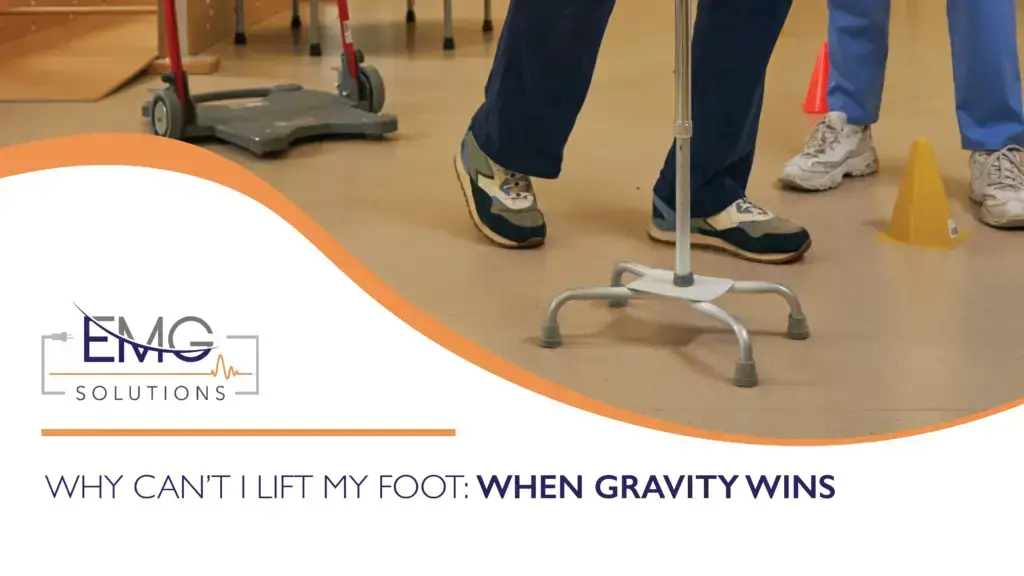
By Drayton Perkins, PT, DPT, ECS Foot drop—when you suddenly cannot lift the front of your foot—can be alarming. This condition often leads to an increased fall risk as well as an unusual gait pattern where one has to lift the knee higher to avoid dragging the foot, known as a “steppage gait.” But what […]
Comparing Electrodiagnostics (EMG/NCS) to Magnetic Resonance Imaging for the Evaluation of Lumbosacral Radiculopathy
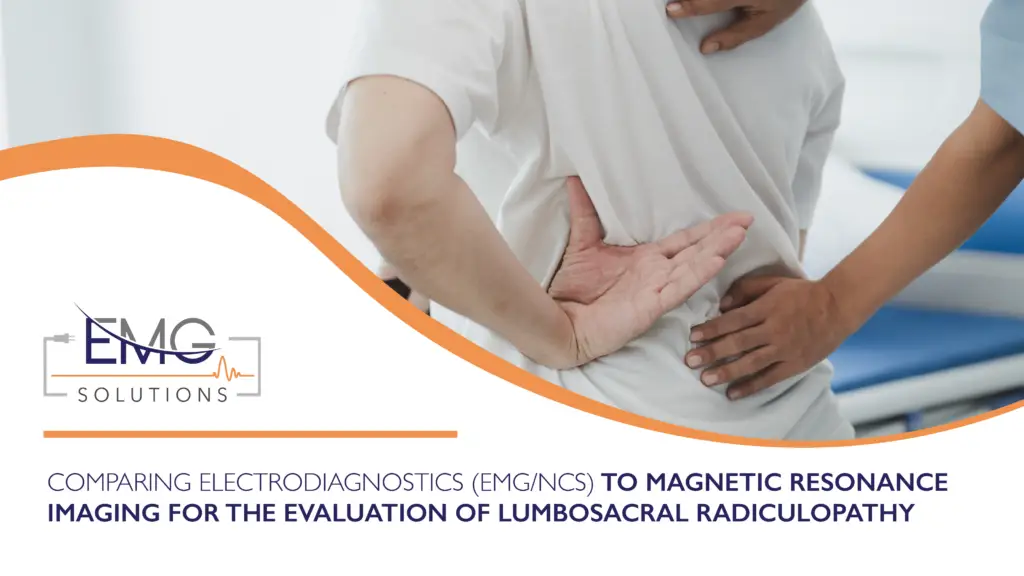
By Daniel Trapp, PT, DPT Low back pain and lumbar radiculopathy are common conditions affecting the general population. Low back pain has a prevalence of 10%-30%, and lumbar radiculopathy has a prevalence of 3%-5% [1]. Differentiating between low back pain and lumbar radiculopathy can be tricky, as low back pain is often used to describe […]
Can an EMG/NCS help diagnose the cause of weakness following a stroke?
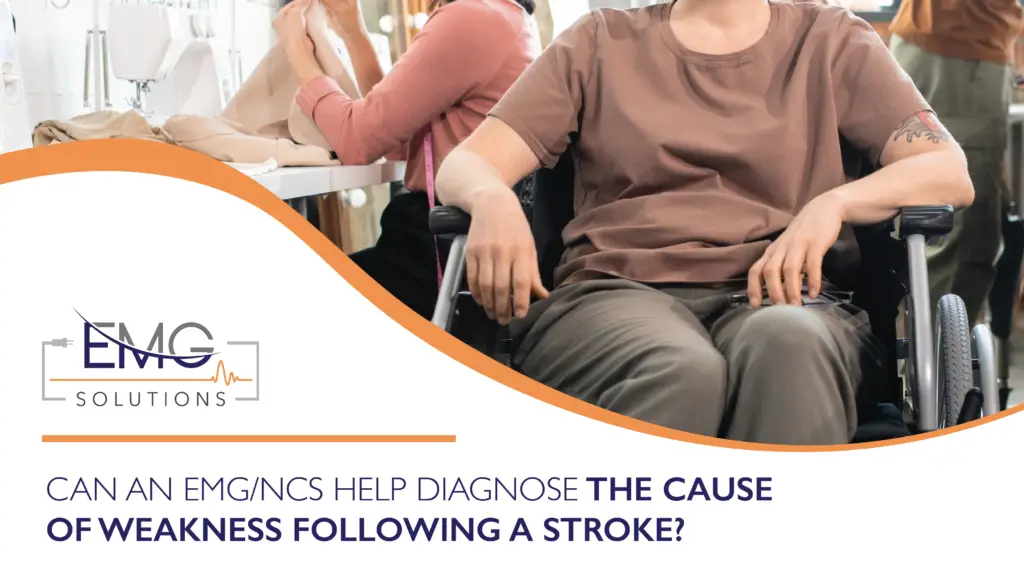
By Karah Loftin, PT, DPT Strokes are relatively common, affecting millions of people each year. In the United States, for instance, about 795,000 people have a stroke annually, making it the fifth leading cause of death. A stroke occurs when the blood supply to part of the brain is interrupted or reduced, preventing brain tissue […]
Diabetic Neuropathy
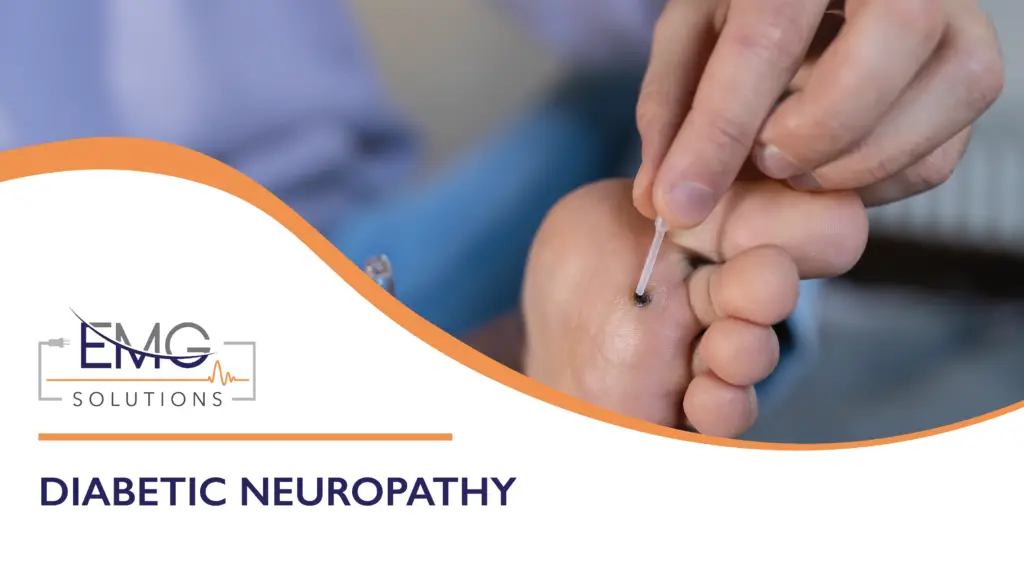
By Paul Bang, PT, DPT, ECS Diabetic peripheral neuropathy encompasses various neurogenic disorders resulting from diabetesmellitus type 1 and type 2. This condition can be classified into distal symmetric polyneuropathy (DSPN),diabetic autonomic neuropathy, superimposed mononeuropathies, and, though rare, polyradiculopathy 1.The incidence of diabetic neuropathy in individuals with diabetes mellitus can reach 50–66% over theirlifetime 3. […]
Traumatic Neuroma
Traumatic Neuroma- nerve damages from outside the common compression neuropathy. Introduction We encounter various neuropathic symptoms and pain every day. Patient reports of neuropathic pain can differ in descriptions, characteristics, and patterns. It is crucial for healthcare providers, especially those working in diagnostics, to understand which pathological presentations necessitate more direct interventions, such as surgery […]